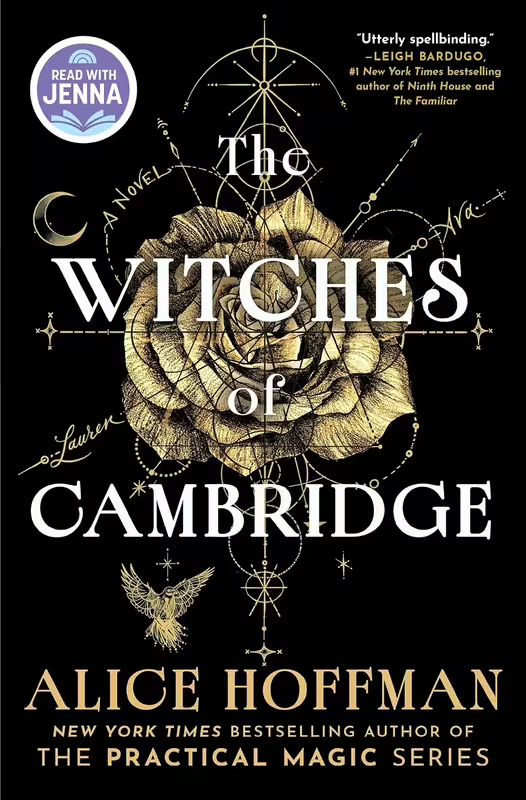
The Witches of Cambridge by Alice Hoffman
The Witches of Cambridge by Alice Hoffman is an atmospheric historical fantasy that brings magic, friendship, and female independence together against the fascinating backdrop of 1950s Cambridge, Massachusetts. Ava arrives at Radcliffe College from a small town in Maine, expecting a new life filled with education and possibilities, but instead discovers a secret world hidden beneath the university’s respectable surface. Her meeting with Lauren, a confident and unconventional young woman from an influential Cambridge family, changes everything. Though the two seem completely different, they are drawn together through the mysterious Lilith Society, a secret circle of witches whose origins reach back to the colonial era.
As Ava and Lauren discover more about their unusual heritage, their friendship becomes one of the emotional centers of the story. Magic gives them a new sense of identity and freedom, but it also forces them to confront difficult questions about power, loyalty, love, and the expectations placed upon women. Meanwhile, the growing fear surrounding McCarthyism creates an uneasy atmosphere in Cambridge, where intellectual freedom and unconventional ideas can carry real consequences.
When members of the Lilith Society begin disappearing, the novel takes on a darker layer of mystery. The past suddenly feels much closer, suggesting that the old fears surrounding witches, outsiders, and independent women may never have disappeared completely.
Hoffman combines historical fiction, magical realism, feminist themes, mystery, and emotional storytelling into a novel that feels both intimate and richly atmospheric. Rather than relying solely on supernatural spectacle, she uses magic as a way to explore identity, friendship, resilience, and the courage to become who you truly are. The result is a thoughtful and enchanting story about women discovering their power while learning that the strongest magic may be the connections they create with one another.
Strengths and Weaknesses
Strengths
Weaknesses
Key Ideas From the Book
Who Should Read This Book
As Ava and Lauren discover more about their unusual heritage, their friendship becomes one of the emotional centers of the story. Magic gives them a new sense of identity and freedom, but it also forces them to confront difficult questions about power, loyalty, love, and the expectations placed upon women. Meanwhile, the growing fear surrounding McCarthyism creates an uneasy atmosphere in Cambridge, where intellectual freedom and unconventional ideas can carry real consequences.
When members of the Lilith Society begin disappearing, the novel takes on a darker layer of mystery. The past suddenly feels much closer, suggesting that the old fears surrounding witches, outsiders, and independent women may never have disappeared completely.
Hoffman combines historical fiction, magical realism, feminist themes, mystery, and emotional storytelling into a novel that feels both intimate and richly atmospheric. Rather than relying solely on supernatural spectacle, she uses magic as a way to explore identity, friendship, resilience, and the courage to become who you truly are. The result is a thoughtful and enchanting story about women discovering their power while learning that the strongest magic may be the connections they create with one another.
Strengths and Weaknesses
Strengths
- Atmospheric setting: 1950s Cambridge feels vivid, mysterious, and almost magical itself.
- Strong female characters: Ava and Lauren develop a compelling and emotionally believable friendship.
- Rich themes: The novel explores feminism, identity, independence, friendship, and female power.
- Beautiful storytelling: Hoffman’s lyrical prose gives the story a dreamy, timeless quality.
- Historical depth: Witchcraft, colonial history, and McCarthyism create several intriguing layers.
Weaknesses
- The story is readers seeking constant suspense may find it slower.
- Some supernatural elements remain intentionally mysterious rather than fully explained.
- The many thematic layers may appeal more to readers who enjoy literary historical fantasy than straightforward witch stories.
Key Ideas From the Book
- Female power: Women do not need permission to recognize their own strength.
- Friendship as a source of courage: Genuine connection can become a powerful form of resistance.
- The past never completely disappears: Historical fears and prejudices can continue influencing the present.
- Identity and independence: Becoming yourself often means questioning the role others have chosen for you.
- Magic as metaphor: Witchcraft represents intuition, freedom, creativity, and the power women have often been taught to suppress.
- Sisterhood matters: Shared experiences can connect people who appear completely different on the surface.
- Courage against conformity: Living authentically can require standing against social expectations.
Who Should Read This Book
- Fans of Alice Hoffman who enjoy her signature combination of magic, emotion, and memorable female characters.
- Readers of historical fantasy looking for a story that blends witchcraft with real historical tensions.
- Fans of feminist fiction interested in female independence, friendship, and challenging traditional expectations.
- Readers who love secret societies and mysterious disappearances woven into storytelling.
- Anyone who enjoys atmospheric novels with lyrical prose, strong relationships, and a touch of magical realism.